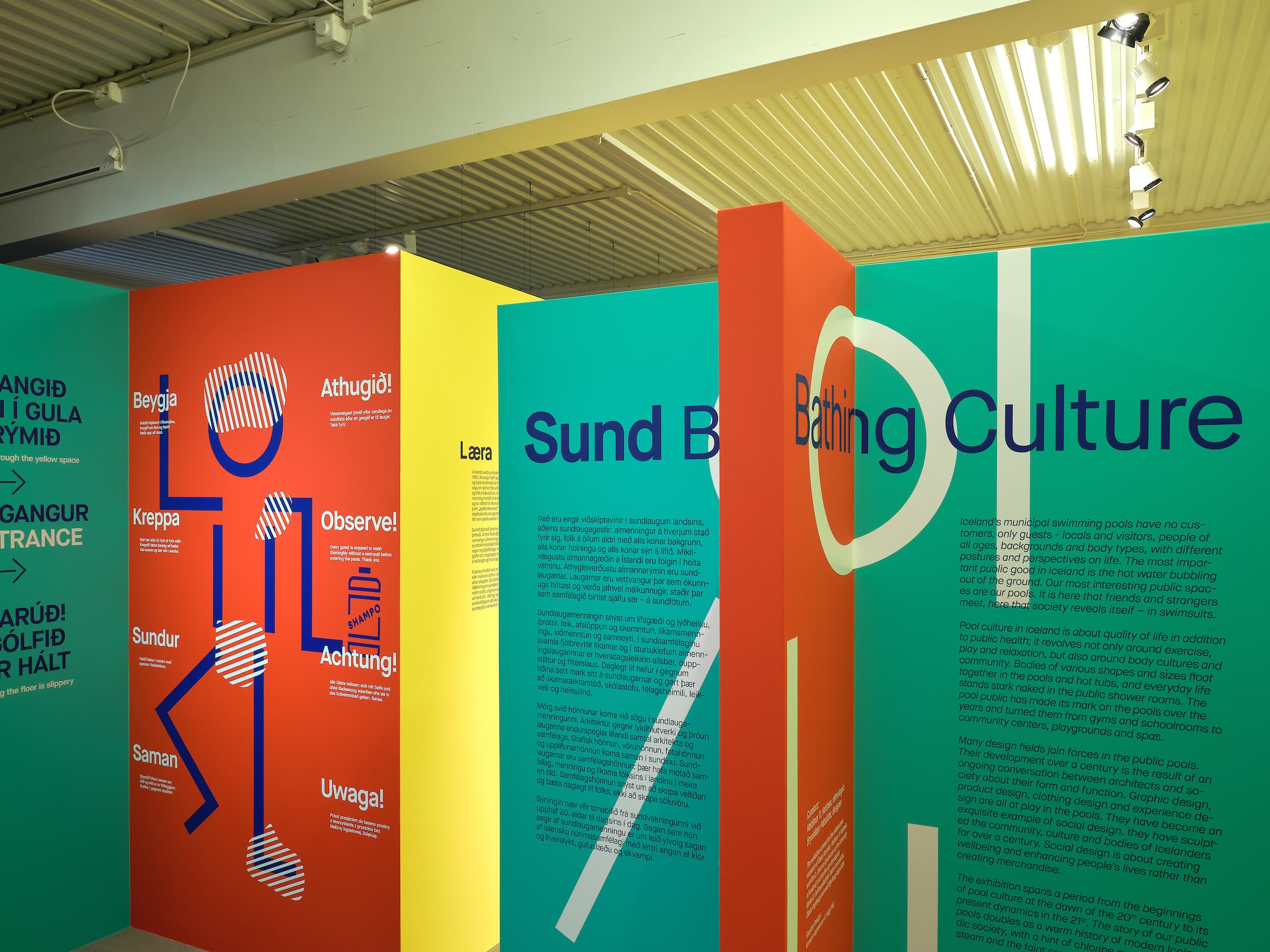
BathingCulture
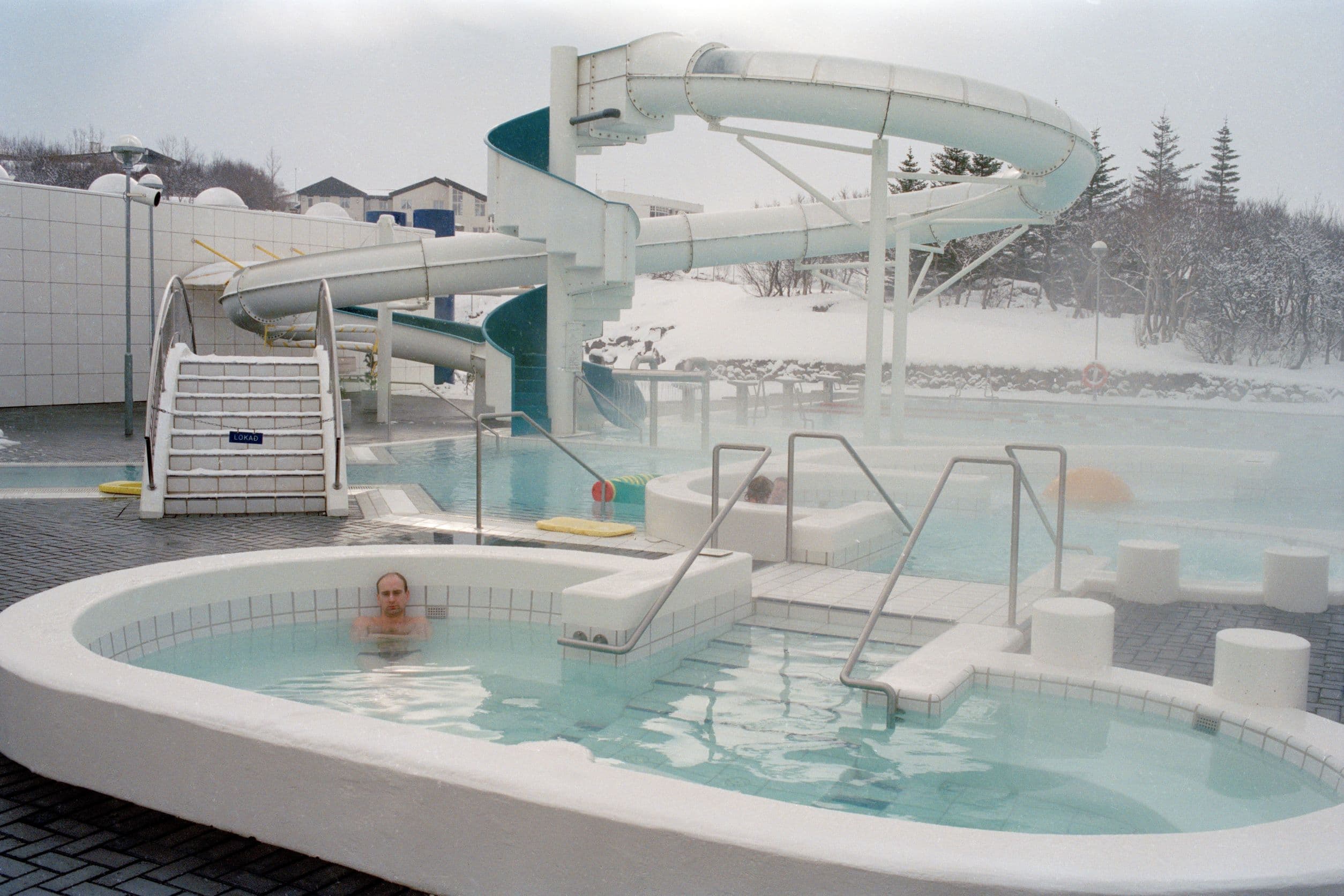
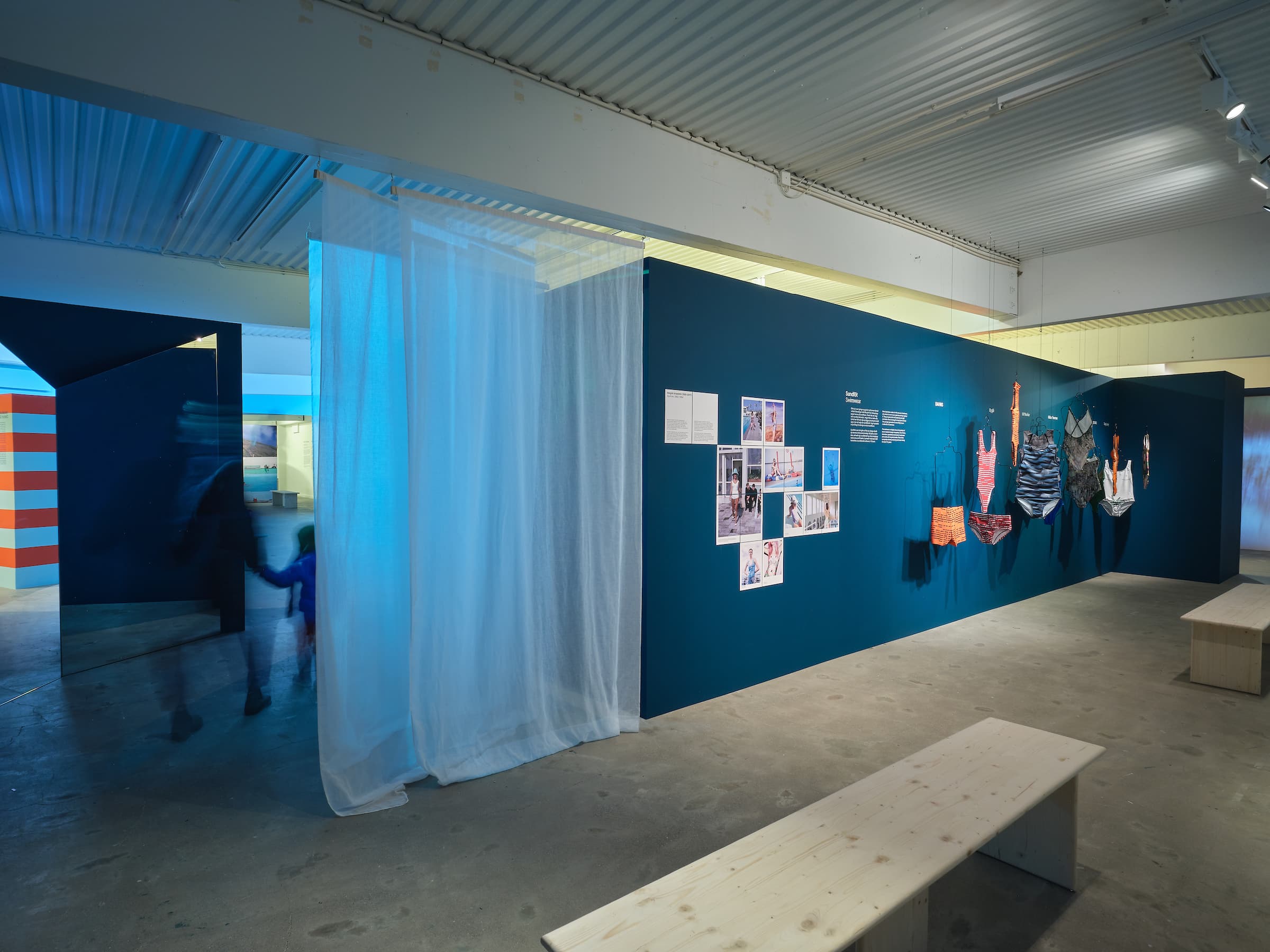
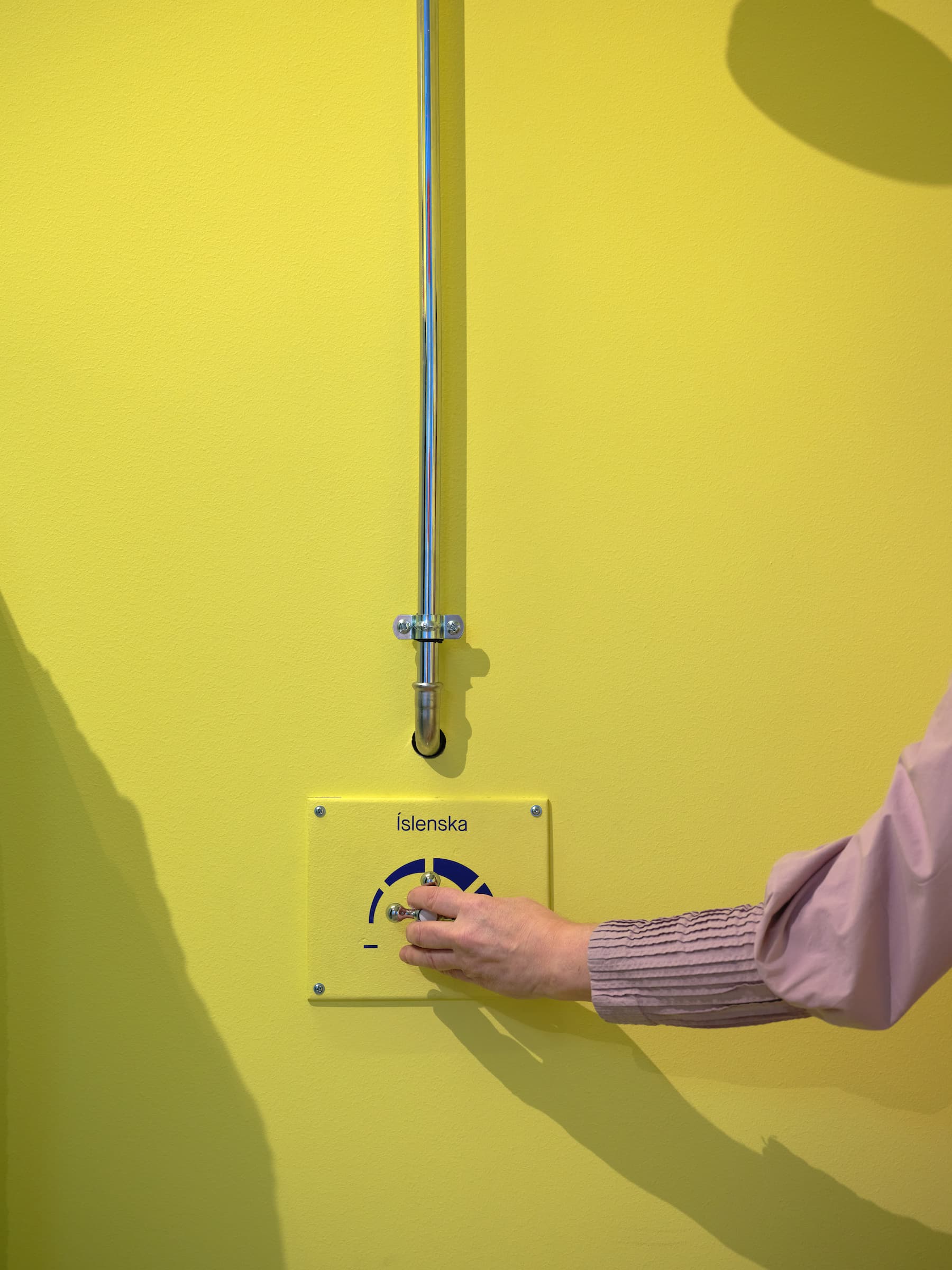
Iceland’s municipal swimming pools have no customers, only guests – locals and visitors, people of all ages, backgrounds and body types, with different postures and perspectives on life. The most important public good in Iceland is the hot water bubbling out of the ground. Our most interesting public spaces are our pools. It is here that friends and strangers meet, here that society reveals itself – in swimsuits.
Pool culture in Iceland is about quality of life and public health; it’s about sports, play and relaxation; about body culture, civilization and community. Bodies o f various shapes and sizes float together in the pools, and everyday life stands stark naked in the public shower rooms, no filters. The pool public has made its mark on the pools over the years and turned them into gyms, schoolrooms, community centers, playgrounds and spas.
Many design fields join forces in the public pools. Their development over a century is the results of an ongoing conversation between architects and society about form and function. Graphic design, product design, clothing design and experience design are all at play in the pools. The public pools are an exquisite example of social design: they have sculpted the community, culture and bodies of Icelanders for over a century. Social design is about creating wellbeing and enhancing people’s lives rather than creating merchandise.
The exhibition spans a period from the beginnings of pool culture at the dawn of the 20th century to its present dynamics in the 21st. The story of Iceland’s public pools doubles as a warm history of modern society with a hint of chlorine and sulfur, rising steam and the faint sound of splashing.
Learn
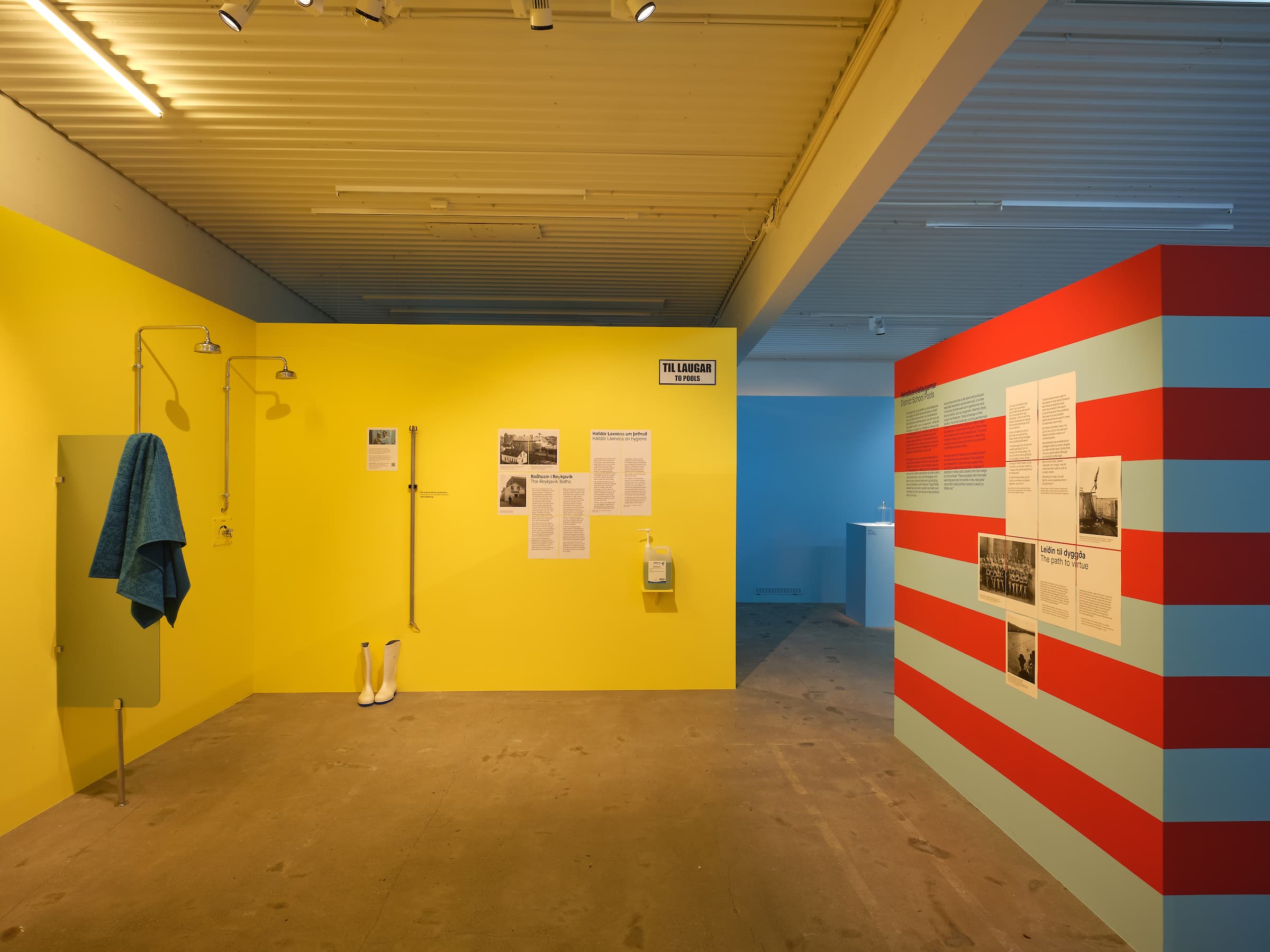
The beginnings of pool culture in Iceland can be dated to the turn of the 20th century. At the time, only 0.5% of the nation knew how to swim and many drowned each year. For the first time since Iceland’s settlement, fishing became a primary source of livelihood for a growing number of people as fishing villages formed around the coastline. Simultaneously, a bourgeois sensitivity taught people new manners and instilled new attitudes to the body in the population. Ideals of health, vigor and “the national body” were intertwined with the independence movement and the making of modern society. All these factors came together in the creation of the public pools.
At the outset, the pools had three intended uses: preserving life, physical education and hygiene. In the first half of the 20th century, the pools were educational institutions. In addition to learning how to swim, people learned new customs: codes of conduct for a modern society took shape in the pools, accompanied by a new relationship to the body which emphasized hygiene and health.
A great number of public pools were built in this period: some of them were no more than the product of dams in rivers, others were stacked turf, others concrete. The Reykjavík Swimming Club was founded in 1884 and organized swimming lessons in the Laugarnes peninsula. After the turn of the century, national youth clubs led the charge to build swimming pools all over Iceland. In 1925 the Icelandic Parliament passed a law allowing municipalities to make school swimming compulsory for teenagers; in 1940, swimming became a compulsory part of the national school curriculum.
Play
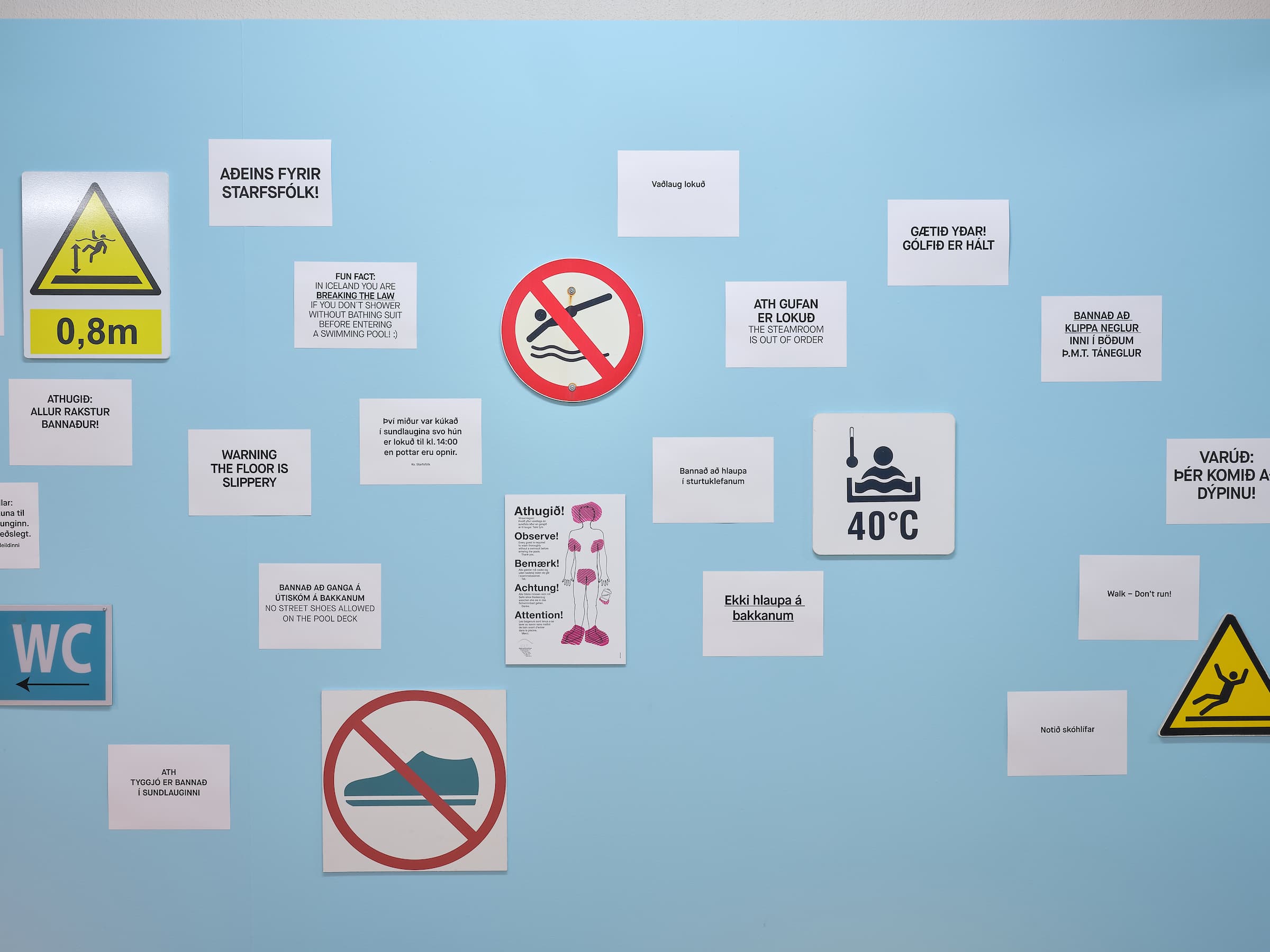
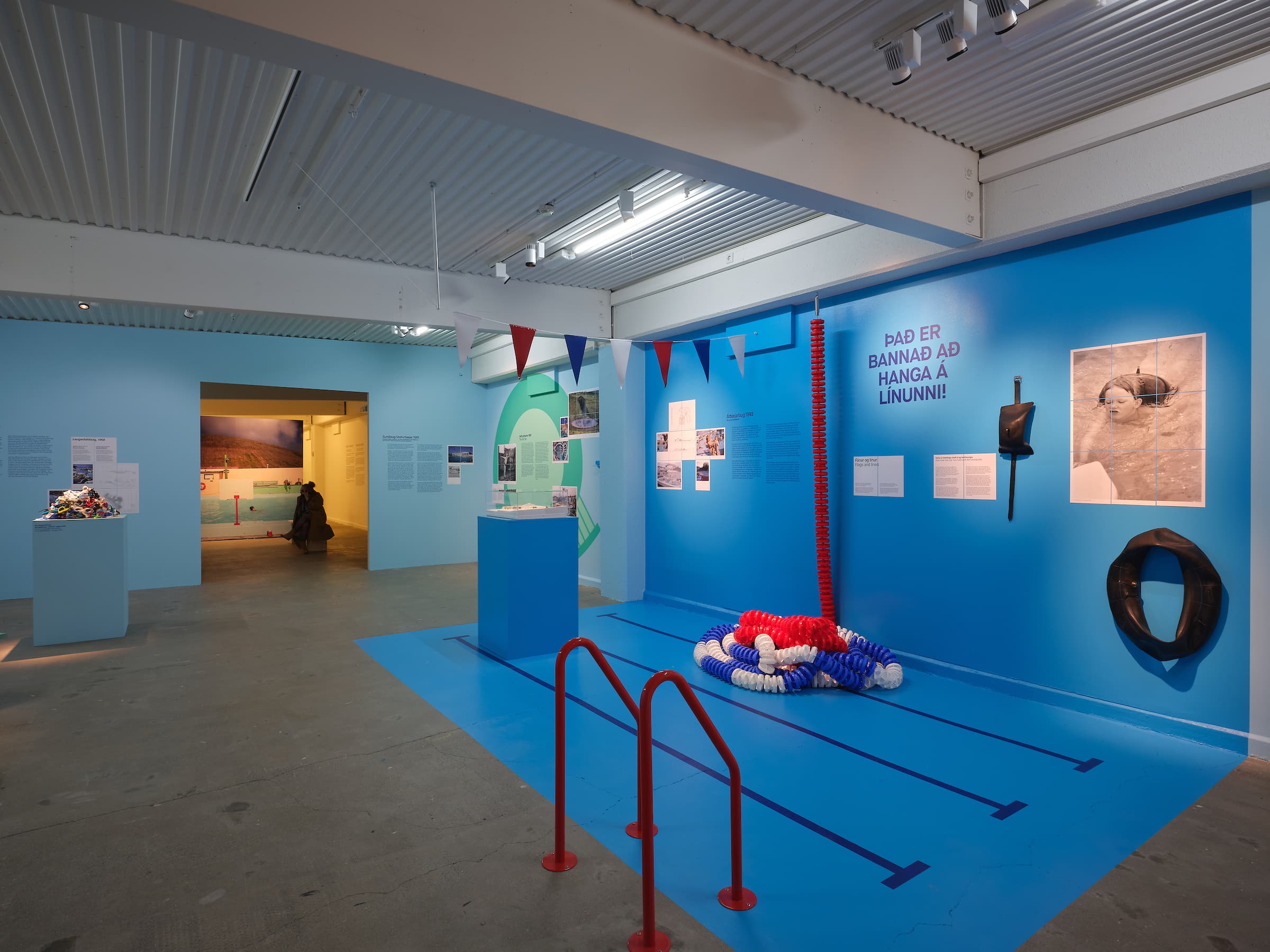
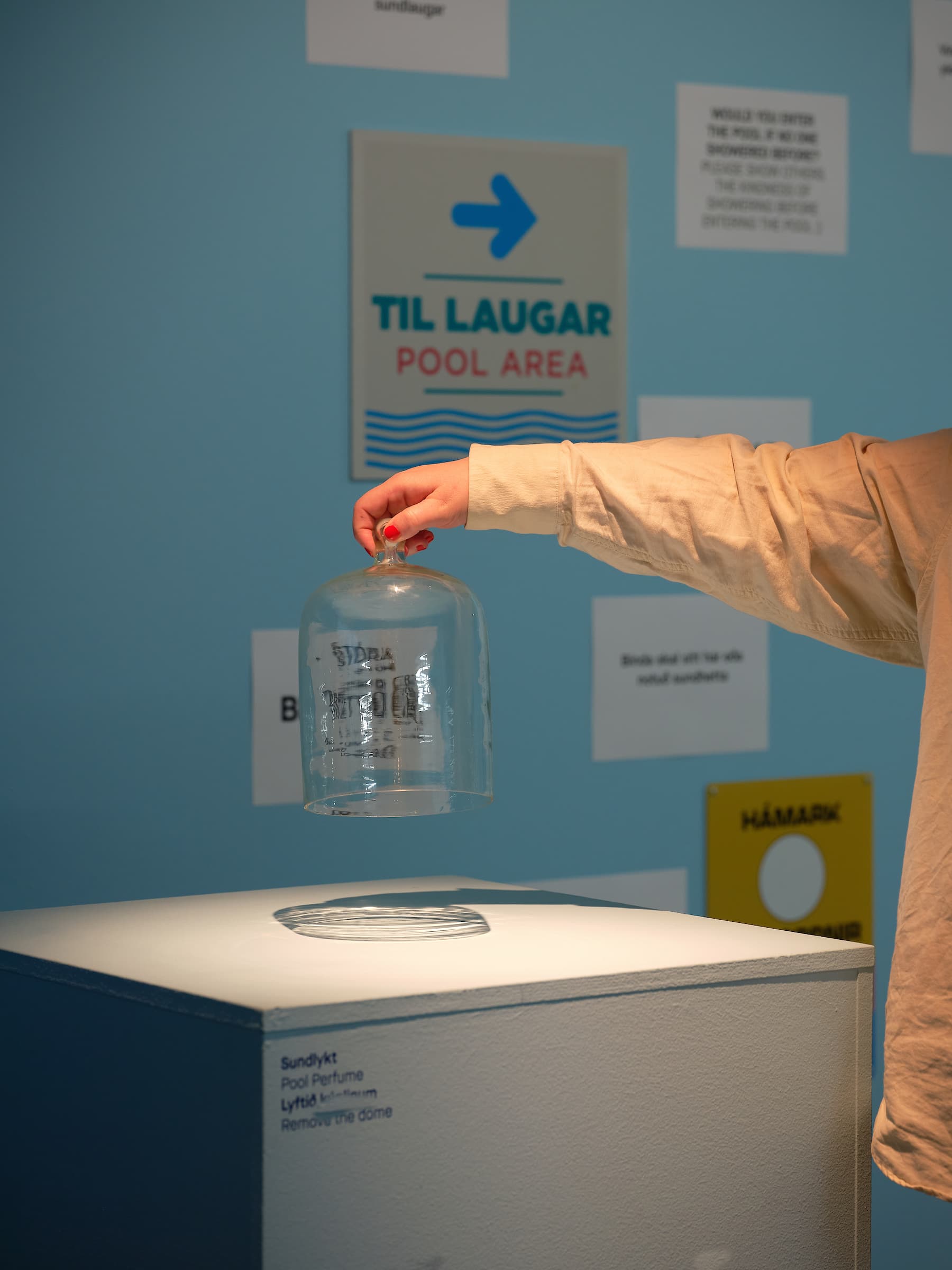
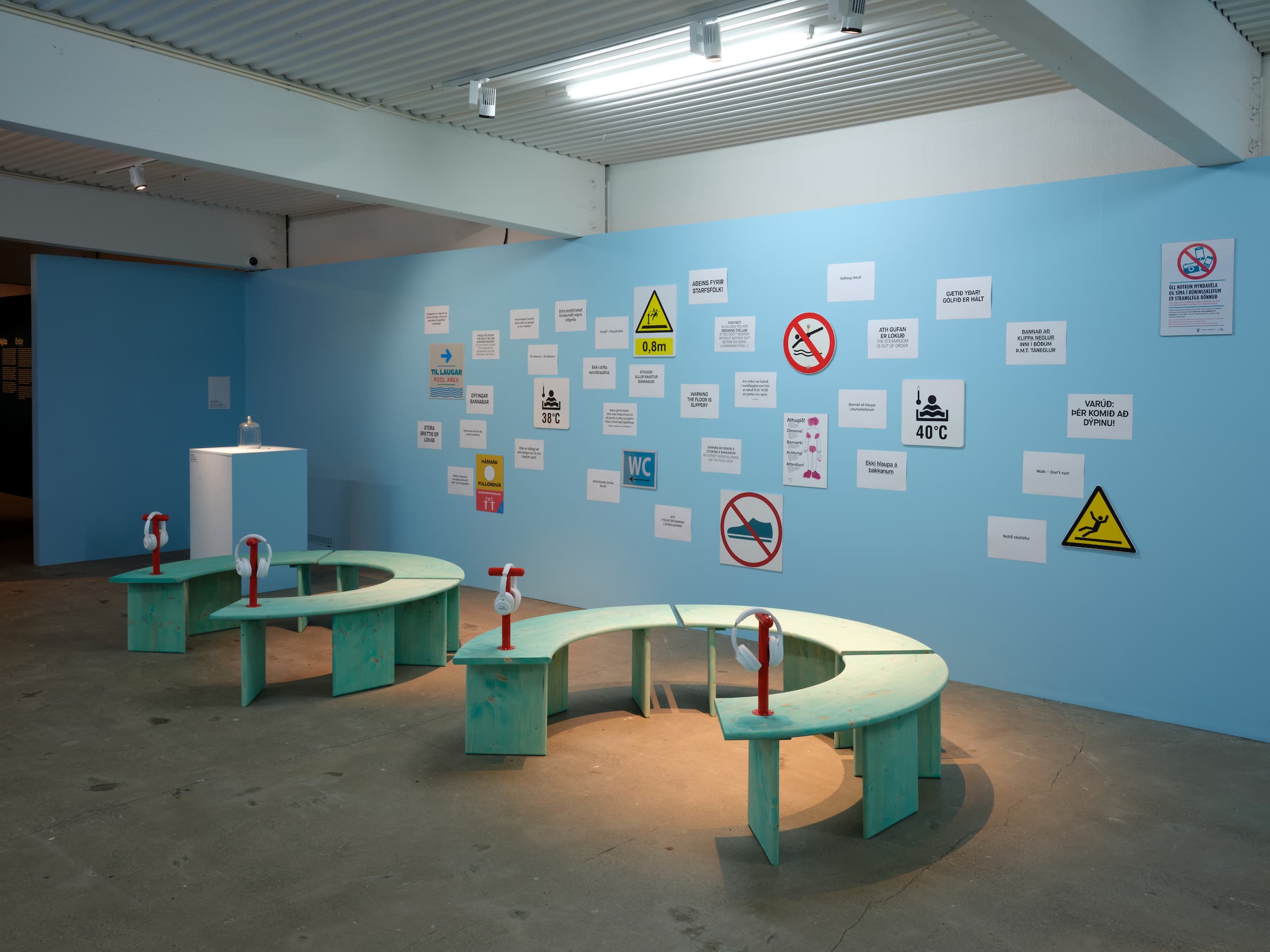
In the second half of the 20th century, people no longer went to public pools just to learn but also to play. Friends and family headed to the pool for fun, to enjoy themselves and meet others. Hot tubs, steam baths, wading pools and sunbathing facilities were added to the pools and later water slides popped up. The pools host a colorful community that has negotiated a distinctive etiquette and conduct: pool guests nod instead of shaking hands, they look at one another from the neck up and keep conversation light.
The opening of Vesturbæjarlaugin pool in 1961 inaugurated the modern-day hot tubs. Architect Gísli Halldórsson based them on the geothermal pool in Reykholt where Iceland’s best-known medieval poet and scholar, Snorri Sturluson, used to soak sore muscles. The hot tub instantly became a community center and converted the pools into a public sphere that had been missing in Icelandic towns: a place where strangers and acquaintances cross paths. In the decade that followed, hot tubs were added to older pools, and they became integral design features of all public pools built after that point. Moreover, another innovation, wading pools, turned the pools into playgrounds for the entire family. As the century wore on, waterslides were added to wading pools and steam baths joined the hot tubs in the pool area.
Enjoy
In the 21st century, public pools in Iceland are community centers, playgrounds, training facilities and spas. Pool culture is increasingly characterized by a spa sensitivity that prizes relaxation, comfort and luxury above all else. In addition to learning and playing, the operative verb is now to enjoy: enjoy the water, enjoy the bodily sensation, enjoy the company. Hot tubs boast squadrons of massage jets, saunas and steam rooms multiply in number and the emphasis everywhere is on design and experience.
Recent years have seen the introduction of numerous luxury baths, which offer immersive experiences of geothermal nature and foreground architecture and experience design. These can be found all over Iceland and each bath has its own defining characteristics. Along with the public pools, these baths are a primary destination for foreign tourists and the crown jewel in Iceland’s image abroad.
The luxury baths develop elements from Iceland’s public pools with private investment, marketing them to new customers. The influence is reciprocal: innovations in the public pools build in turn on the experience design of the luxury baths – thus intensifying the emphasis on enjoyment in addition to learning and playing.
Curators: Valdimar T. Hafstein, ethnologist and Brynhildur Pálsdóttir, designer
Graphic design: Ármann Agnarsson and Helgi Páll.
Co curator: Sigríður Sigurjónsdóttir
The exhibiiton is a collaboration with The University of Icealnd. It is based on the research of Arnar
D. Jónssonar, Ólafs Rastrick og Valdimars Tr. Hafstein as well as the researh of the ethnologists
Katrín D. Guðmundsdóttir, Katrín Snorradóttir, Ólafur Ingibergsson og Sigurlaug
Dagsdóttir.